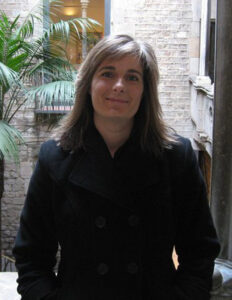
My career path is not a typical academic’s path. I grew up in Scotland, which as a country is distinguished from England, beyond the most obvious things, by having a different educational system. The English system is based on concentrations quite early. In Scotland, you are a generalist right through high school and even into college. I then attended the University of Manchester, where I received two degrees in architecture. So I became a licensed architect, and worked designing buildings in England and the Middle East.
I found that I was unsatisfied living in London and began looking for something that was beyond architecture. I came across the book, Design with Nature, by Ian McHarg, who was one of the world’s top ecological planners. He talked about the roles of nature, the environment, and people in the environment. It struck a chord. He was an educator who projected his ideas that we have to work with the environment in order to be sustainable. I know that may sound very obvious now, but in the 1970’s that was quite revolutionary.
So I did something very odd: I got his number and I called him. He was the professor at Penn in Philadelphia, and he must have just been walking past the phone in the department office that day because he answered my call. We had an hour-long conversation, which I think actually cost me a lot of money at the time (laughs), and he told me I had to come and study under him.
In the next 4 months, I gave up everything. I came to Penn in the fall of ’83 with nothing but two suitcases. I went on to get a master’s degree under Ian, and he was truly my mentor.
After graduation, I worked for one of my professors who had just planned some large projects in London. So my second career was as a landscape architect dealing with buildings, open space, infrastructure, parks, and the reclamation of former docks, in London and in Barcelona. My office was run by academics, and very slowly they began to bring me in to help out with teaching.
Eventually, I entered the third part of my career at the age of 40 when I took a faculty position as an assistant professor at the Harvard GSD. I came to focus on landscape planning on a large scale.
Let me add a little twist. In my first job as an architect, which is my phase one career, I had been working partly in Scotland on land reclamation – mining projects on the West Coast of Scotland. When I started to lay out a research agenda at Harvard, my work again came to focus on the reclamation of land, either that was polluted or abandoned.
Now, I wouldn’t want to suggest that somehow I had this all perfectly planned out, but it wasn’t completely random. It was a slow progression, where I began to build on my generalist education. I now am able to connect teams of specialists to one another. I allow scientists to talk to planners. I allow people focused on community action or environmental justice to talk to regulators. I was able to pool all the pieces together to make it holistic.