Needless to say it wasn’t a direct path. I didn’t know what I wanted to do in high school or college, except that I knew that I was generally very interested in health. When I went to college in the late 60’s, there were a lot of distractions. I became a conscientious objector to the Vietnam War and did two years of alternative service, during which I worked in a community hospital.
Over these two years, I became certified as an x-ray technician in a radiology department. As one of the few x-ray technicians with a bachelor’s degree, I ultimately was recruited to get a master’s degree in teaching radiological sciences at the University of Houston and Baylor College of Medicine in Houston. I really hated it. It just wasn’t humanistic enough for my interests (laughs).
While I was down there, I met my wife, who was a child development specialist for Harris Country Child Welfare. I thought what she was doing was a lot more fun than what I was doing, so we both decided to go back to school, which brought us up to Boston. I first did a master’s degree at Tufts in child development, and then I came over to Harvard to do the Human Development: Cross-Cultural Program. Harvard started a clinical program, Counseling and Consulting Psychology, while I was there, so I did both of those programs.
I completed both my internship and post-doc at Massachusetts General Hospital. One of my unrealized goals was to go work for Indian Health Service after completing my training, but my wife didn’t finish school when I did, so I needed to take a job while she finished her dissertation. I stayed at MGH, was offered absolutely incredible opportunities, and I’ve had a hard time getting out of here (laughs). I’m still here 30 some years later.
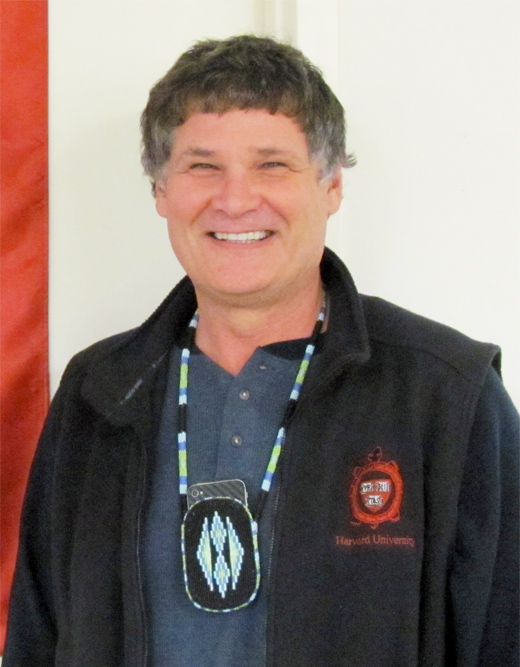
More recently, I got involved with the Harvard University Native American Program. A while back, HUNAP was going through real identity and financial difficulties, and Steve Hyman, a psychiatrist I’d known at MGH, who was then the provost at Harvard, asked me to get involved. I talked with Steve about goals for HUNAP and then started the Native Health Initiative. I also volunteered to work with students at HUNAP, and about a year and a half later, the previous faculty chair, Joe Kalt, asked me to take over his position. Since 2005, I’ve split my time 50% between MGH and 50% between HUNAP and my health projects.