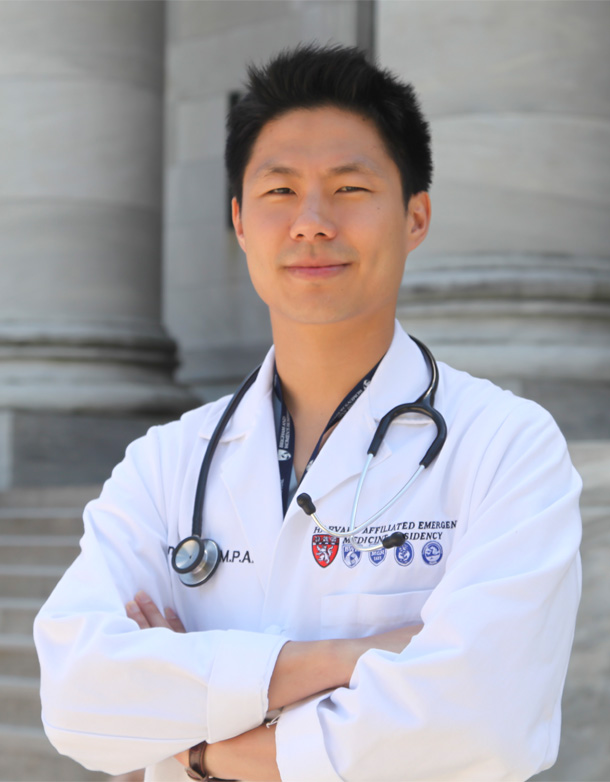
I started the Divided Families film project in my second year in medical school, which was 2008, I believe. It was a pretty intense time because we were studying for our USMLE Step 1 Board Exam, but this issue of families just kept coming back to me. I kept thinking about it. I felt I needed to do something about it and have a small contribution. I got my friends from the Fulbright Fellowship to come, and I did some research about the topic. I remember going to Countway Library, getting this book about divided families that was in English. I read through it all while studying cardiorespiratory pathophysiology. I remember scanning the book into a PDF file. I did a lot of research on the history of the issue, but there really wasn’t much research on Korean Americans. There were a lot between North and South Koreans, though.
So I did the research, and I got connected with an organization called Saemsori at that time, which was trying to advocate for divided families and reunions between Korean Americans and North Koreans in Washington, DC. They already had an organization that was doing this, and I got connected with their spokesperson, Cha-hee Lee Stanfield, who was an amazing person. Senator Mark Kirk called her “a dynamo of energy” who had continued to work on this issue for a long time. I got connected with her, and then I got connected with some other divided families who do that organization. I came up with a list of questions that I wanted to ask them. In our interviews, I got my friends from the Fulbright to film the thing. We went to New York, had some preliminary interviews, and then another friend of mine from the Fulbright edited a two-minute clip. Then, through some other friends, I met Eugene Chang, who was my partner in the project, and we decided we needed to raise some money to film this thing. So we raised money.
I had a huge fundraiser—huge to us—in New York. That was June 25, 2009, and the only reason I remember the date is that June 25 was the historic start of the Korean War in 1950. It’s funny because that was actually the day Michael Jackson died, so people were talking about that during our fundraising. Anyway, we were able to raise tens of thousands of dollars, and we were ready to make the film. We did a lot of research on who we were going to interview and what the storyline was going to turn out to be. You can’t predict all of that in a documentary, but you go in with having a decent idea what you want to get. Then we recruited a bunch of volunteers, to either film, to translate, to transcribe interviews, or to help with editing for the website. Bum Lee is amazing; he edited a lot of the film for a lot of our events that we were trying to put on to raise awareness. We also had people like Jieun Baek, who did such amazing work in rallying around this issue and getting people inspired and excited about it.
We’ve come a long way. We’ve had multiple screenings of our edit along the way because we want to raise awareness. We had our first screening at the Harvard Kennedy School while I was a student there. We had a screening in UC, San Diego. We had one in Korea on a Fulbright. We had one in the Dirksen Senate Building through Senator Kirk’s office. And we’ll continue to have screenings to raise awareness. We’ve interviewed nearly 20 people for the film. We’ve raised nearly $50 thousand to $60 thousand to make this happen. We’re just about to finish, so it’s been a labor of love and a test of endurance, but it’s almost there.
Our mission for thinking about a film was the whole point of it. When I first thought of it, one, we can record the history because these stories are so rich and they’re not told so much. I guess in my family experience, it’s not a very open culture of sharing their feelings, their hurt, and their pain. But some families, they may have shared their stories to the coming generations, but I wanted to record the history, for the record. I think that, in and of itself, is important. Then the second part of the mission was to raise awareness, which we’re going through the events that we put on and hopefully through the distribution of our film. The third was to advocate for reunions so that this film could get people interested in the issue and stir up our voices in a democratic society and to help advocate for this generation. That’s the three-part mission of our film.